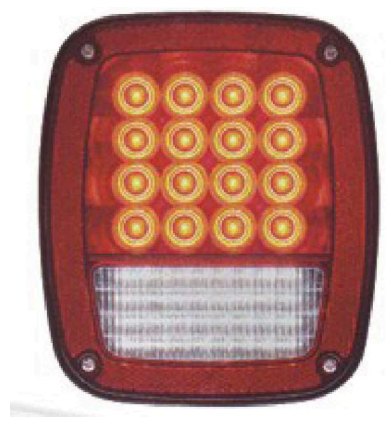
“DOT approved” is the most common phrase in aftermarket truck lighting and one of the least accurate. There is no US authority that approves lighting products, and there is no such document. What exists is a self-certifying federal standard, a set of SAE performance standards behind it, and fifty state equipment codes layered on top. This page explains what US buyers are actually required to check.
What FMVSS 108 Actually Is
Federal Motor Vehicle Safety Standard No. 108, published as 49 CFR 571.108, is the US standard for lamps, reflective devices and associated equipment. It sets out which lamps a vehicle must have, where they must sit, what colour they must be and how much light they must produce, and it applies to vehicles and to the equipment sold for them.
Two things about its structure matter commercially. First, it is concerned primarily with required lighting — the lamps a vehicle cannot legally be on the road without. Second, the detailed performance requirements are not written out in the standard itself: they are referenced to SAE publications, which is why the SAE code on a lens carries so much weight in the US.
There Is No Such Thing as DOT Approval
Under the US system, the manufacturer tests the product, certifies that it conforms, and carries the legal responsibility for that claim. There is no pre-market approval body, no certificate issued to the buyer, and no government list of approved lamps.
The DOT mark is a manufacturer’s self-certification, not a government endorsement. Lamps and reflective devices that conform may carry the DOT symbol on the lens. That symbol means the maker claims conformity with FMVSS 108. It does not mean the Department of Transportation has seen, tested or approved the product — and manufacturers are not permitted to market it as “DOT approved”, because that phrasing misdescribes the system.
This is why “can you send me your DOT certificate?” has no honest answer. What you can legitimately ask for is the SAE code on the lens, the manufacturer’s declaration of conformity, and the underlying test report. Enforcement in the US happens after the fact, through recalls, customs action and liability, which is precisely why the paperwork you hold matters more, not less.
Compare this with the ECE system covered in our compliance hub, where an independent authority tests the design and issues a traceable approval number. Both systems work; they simply place the burden of proof in different places. Importers who treat them as interchangeable are the ones who get caught.
Required Lamps vs Auxiliary Lamps
The single most useful distinction for a US buyer is whether the lamp you are selling is required or auxiliary, because the two are governed by different rules and different standards.
| Required lamps | Auxiliary lamps | |
|---|---|---|
| Examples | Headlamps, stop lamps, turn signals, position and marker lamps, licence plate lamps, reflectors, conspicuity tape | Light bars, auxiliary driving lamps, fog lamps, extra work lights |
| Governing standard | FMVSS 108 (49 CFR 571.108) | FMVSS 108 does not require them. Performance is set by SAE standards referenced by states and by FMCSA rules. |
| Specific references | FMVSS 108 tables, plus the referenced SAE publications | SAE J581 for auxiliary driving lamps; SAE J583 for front fog lamps |
| Commercial vehicle rules | FMCSA equipment rules apply to required lighting | 49 CFR 393.24 requires commercial vehicle auxiliary driving lamps to meet SAE J581 and front fog lamps to meet SAE J583 |
| Marking you look for | The DOT symbol where applicable, plus the SAE code moulded into the lens | The relevant SAE code. A lamp carrying none is, by definition, off-road only. |
One more layer applies to colour. FMVSS 108 assigns a colour to every lamp position, and NHTSA has consistently read the standard as permitting only white or amber for forward-facing auxiliary lamps — the reasoning being that red can be confused with a tail lamp, blue with emergency vehicles and green with traffic signals. Red and blue forward-facing light is reserved for emergency services in every state.
Reading the SAE Code on a US Lamp
On a US-specification lamp the functional information lives in the SAE markings. The standard publications a buyer will meet most often are these:
| Reference | Covers | Why a buyer cares |
|---|---|---|
| SAE J578 | Colour specification for signal lighting | Defines what “amber” and “red” mean photometrically. A lamp outside the specification is not compliant even if it looks the right colour. |
| SAE J759 | Lighting identification code | The letter system that tells an inspector which function a lamp is approved for. |
| SAE J581 | Auxiliary upper beam (driving) lamps | The standard a legal auxiliary driving lamp in the US must meet. |
| SAE J583 | Front fog lamps | Requires a wide, low beam with a sharp horizontal cutoff so it does not blind oncoming traffic. |
| SAE J845 | Warning devices (beacons) | The reference for amber warning lamps, which in the US are regulated at state level rather than by FMVSS. |
The practical reading is straightforward. A tail lamp marked with an SAE code for the rear position function is claiming conformance for a required function. An auxiliary lamp marked J581 or J583 is claiming conformance for an optional one. A lamp marked “off-road use only”, or carrying no SAE marking at all, is claiming neither — and that label is not advice, it is a statement about what the product was designed and tested to do.
Why Almost Every Light Bar Says Off-Road Only
Most aftermarket LED light bars are flood, spot or combination patterns with no horizontal cutoff and no photometric testing against a US standard, so they cannot claim J581 or J583 and cannot be used as required lighting. That is why they carry an off-road label. It is not an excess of caution from the manufacturer; it accurately describes the product.
It also means that a light bar sold as “off-road only” can be a perfectly good product for its intended use — work light on site, illumination for a yard, lighting for a machine that never touches a public road. The compliance question only arises when it is fitted to a vehicle that uses public roads.
State Rules Are Where Set-Ups Actually Fail
FMVSS 108 is a manufacturing floor, not a licence to use any lamp anywhere. State equipment codes govern how auxiliary lighting may be used on public roads, and they vary considerably. The pattern is consistent even where the numbers differ:
| Dimension | Typical state rule | Practical consequence |
|---|---|---|
| Number of auxiliary lamps | Commonly two forward-facing auxiliary lamps in addition to headlamps; some states allow four, a few cap all forward lamps at five | A six-lamp roof bar is a compliance problem before it is ever switched on. |
| Mounting height | Frequently 16–42 inches (about 41–107 cm) above the road for auxiliary driving lamps | Roof-mounted bars often sit outside the permitted band — one reason cover requirements exist. |
| Brightness | Some states set a hard limit such as 300 candlepower for auxiliary lamps; others allow more under stated conditions | Output that is an advantage off-road can be a citation on-road. |
| Covers | A number of states require an opaque cover over non-street-legal auxiliary lamps while on a public road, even when switched off | Cover and switch design becomes part of the product, not an accessory. |
| Wiring and switches | Auxiliary driving lamps frequently must be on an independent fused circuit and, in several states, may only operate with the high beam | “Legal lamp, illegal wiring” is the most common and least defended citation. |
| Rear-facing white light | Most states prohibit or heavily restrict it, permitting white only as a reversing lamp | Rear work lights must be switched so they cannot illuminate while driving. |
Not legal advice. State equipment codes are amended regularly and a handful of states are considerably stricter than the pattern above. Before importing a batch for road use, confirm the current rule with the relevant state DMV or transportation code, and treat the most restrictive state on your customers’ routes as the practical ceiling.
What to Ask Before You Import
- For required lamps: a photograph of the DOT symbol and the SAE code actually moulded into the lens of the SKU you are buying.
- For auxiliary lamps: which SAE standard the lamp is claimed against — J581 for driving lamps, J583 for fog lamps — and a test report that supports it.
- A declaration of conformity naming the model, the standard and the signatory. This is the real document in a self-certifying system.
- Colour compliance: confirmation that amber and red meet SAE J578, not merely that they look correct.
- A straight answer on “DOT approved”. A supplier who claims the US government approved their lamp is describing the system incorrectly, and that is worth knowing before you place an order.
- Wiring and switching guidance to pass on to your customers, because the state-level failures are usually electrical rather than optical.
Related Reading
The FMVSS 108 system sits at one corner of the global picture. These pages cover the frameworks it is most often confused with, and the practical detail behind them:
For the lamps most often discussed in a US compliance conversation, see the tail lamp range and the marker lamp range — the JT-TL001 combination LED tail light kit and the JT-MK001 round sealed marker light are typical of the required-lamp category.
Frequently Asked Questions
Is there such a thing as DOT approval for lights?
No. The US has a self-certification system: the manufacturer tests the product against FMVSS 108 and the referenced SAE standards, certifies conformity itself, and carries the liability. No government body approves individual lighting products and no certificate is issued to the buyer. A lamp may legally carry a DOT mark on the lens as the maker’s claim of conformity, but describing a product as “DOT approved” misstates how the system works.
Do LED light bars need to be DOT compliant?
Only if they are used as required lighting on a public road, which most light bars are not designed for. Light bars generally lack the photometric testing and the controlled beam cutoff that FMVSS 108 and the SAE auxiliary standards require, which is why they are labelled off-road only. For site, yard and machine use that label is not a problem. For road use it means the lamp cannot be the vehicle’s required forward lighting.
What is the difference between SAE J581 and SAE J583?
J581 covers auxiliary driving lamps, which supplement the high beam and throw light further down the road. J583 covers front fog lamps, which produce a wide, low beam with a sharp horizontal cutoff so the light does not reach oncoming drivers’ eyes. Both are auxiliary rather than required functions, but they are different optical designs with different legal uses, and a lamp cannot be both.
Can I sell a lamp in the US with only an ECE E-mark?
Not as a required lamp. North American and ECE approvals are separate systems: an E-mark demonstrates conformity with the UN ECE regulations, and FMVSS 108 is the US requirement for required lighting. Many manufacturers produce both variants of the same housing, so the practical answer is to confirm which variant you are ordering — the lens marking will tell you unambiguously, and a quotation that claims both without specifying a part number is worth questioning.
Why does an amber beacon not have a DOT approval?
Because warning devices are not covered by FMVSS 108 as required lighting. In the US, amber warning lamps are regulated through state equipment codes, with SAE J845 as the commonly referenced performance standard. That is why the compliance question for a beacon is different from the question for a headlamp: the product standard is voluntary in federal terms but effectively mandatory once a state code adopts it.
What documents should a supplier provide for US-bound lighting?
For required lamps, a close-up of the lens marking showing the DOT symbol and the SAE code, plus a declaration of conformity naming the model and the standard. For auxiliary lamps, the SAE standard claimed, such as J581 or J583, with a supporting test report. For beacons, the relevant reference such as SAE J845. In all cases the document must name the exact SKU, not a product family, and the markings on the sample you receive should match it.
Lighting for the US Market
JTPART supplies LED lighting for trucks, trailers and plant machinery, including North-American-specification variants where the range supports them. Our partnered factories hold the relevant approvals on the product lines we offer, and we will tell you clearly which SKU is a required-lamp product and which is an off-road or auxiliary lamp — because overclaiming is what creates importer liability downstream.
Ask about US-specification lighting → or browse tail lamps, marker lamps and work lights.