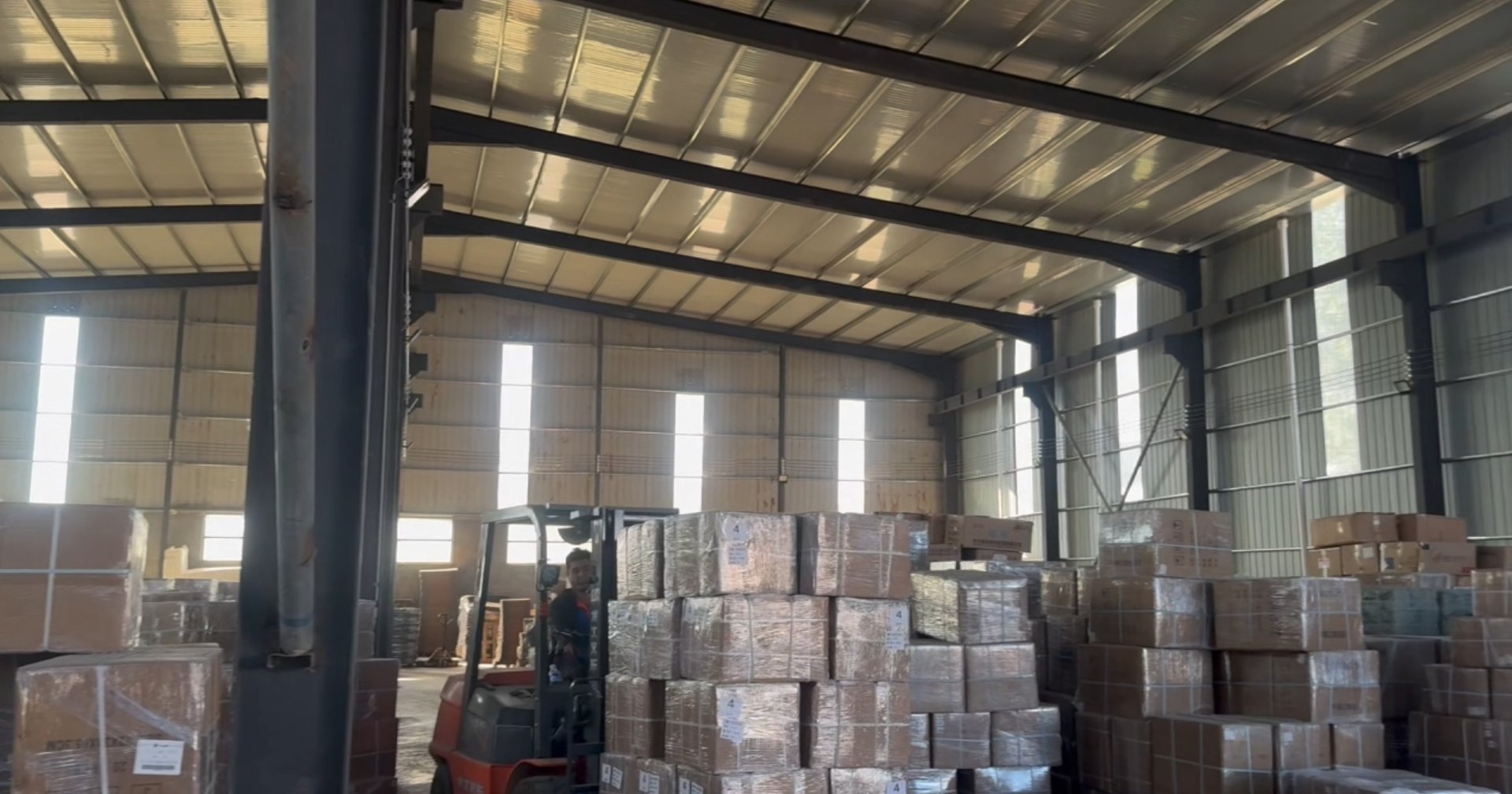
Sourcing truck lighting from China is not a matter of finding “a factory”. It is a sequence of twelve decisions, and the two at the ends — the specification you write before you contact anyone, and the landed cost you actually pay — are the ones that set your margin. Everything in between only decides who takes a share of it.
This guide walks the whole sequence in order. It is written for importers, distributors, fleet buyers and private-label sellers who are buying for resale or for their own vehicles, and who need the purchase to be repeatable rather than lucky.
What Sourcing from China Actually Involves
Three beliefs cause most of the money lost in this trade. Each is half true, which is what makes it expensive.
“I just need to find a factory.” Some of what you will be quoted comes from factories and some from trading companies, and from the outside they look identical. A Chinese export licence does not tell you which one you are talking to. This is not automatically a problem — a good trading company solves problems a single factory cannot — but you should know which business model is quoting you, because it changes what is negotiable. See Step 2.
“The price is the price.” The unit price on a proforma invoice is one of five lines that reach your warehouse. Two suppliers quoting the same lamp can differ more in packing density, freight terms and duty treatment than they do in factory price. Buyers who compare only the first line are the ones who discover the real number when the container lands. See Step 12.
“Certification is the supplier’s responsibility.” Approval is held by whoever tested and declared the product — normally the manufacturing plant, and in our case the factories we work with. Legal responsibility for the goods sitting on your market, however, is the importer’s. If a lamp does not carry the marking it claims, the supplier loses a customer and the importer loses the shipment. See Step 10.
Step 1 — Write the Specification Before You Contact Anyone
A supplier can only quote what you describe. “Truck LED light, good quality, best price” produces a range of quotations that cannot be compared to each other, because each supplier will fill the gaps with whatever suits them. Half an hour spent writing the specification saves weeks of email.
| Specification field | Why the supplier cannot quote without it | What a usable answer looks like |
|---|---|---|
| Target market | It selects the entire approval framework — ECE, FMVSS, SASO or ADR. | “EU-registered trailers, Germany and Poland” |
| Function and position | A marker lamp and a work lamp are different products with different test regimes. | “Front position lamp, 2 per vehicle” |
| Operating voltage | 12V, 24V and 9–32V multi-voltage are different driver designs. | “24V nominal, must survive 9–32V” |
| Output or intensity | Decides the LED count, the heatsink and the price band. | “Comparable to 1800 lm per unit” |
| Colour and colour temperature | Legally fixed for signal functions; open for work lighting. | “Amber, ECE colour co-ordinates” / “5700K” |
| Ingress protection | Selects sealing method, potting and gasket design. | “IP67 minimum, IP69K preferred for washdown” |
| Body, lens and finish | Drives tooling and material cost, and UV behaviour. | “Die-cast aluminium body, polycarbonate lens” |
| Mounting and connector | Bracket geometry and plug type are frequent rework causes. | “Surface mount, 2-bolt, 3-pin DT connector” |
| Order quantity and repeat intent | Sets which price band and which production slot you are quoted for. | “500 units now, 200/month after” |
| Packaging | Carton size drives freight, the single most underestimated line. | “Individual box, 40 per carton, buyer logo” |
Decide the compliance regime first, because it is the hardest to change later. A lamp approved to ECE R148 for the European market is not the same article as one self-certified to FMVSS 108 for the United States; the optics, the marking and often the driver are different. If you sell into several regions, decide now whether you need one common SKU or two regional variants — the answer changes your tooling budget.
If you are unsure which framework applies where, start with the compliance hub, which maps DOT, ECE, SAE and ADR by market, and with DOT vs ECE vs SASO if you ship into the Gulf as well as Europe.
Step 2 — Know Which Type of Supplier You Are Dealing With
Almost every supplier you will find will describe themselves as a factory. In practice the market splits into three business models, and the difference shows up in your quotatations long before it shows up in the invoices.
Factories make what they sell, which usually means deep technical knowledge of their own range and firm, tooling-driven minimums. They are the right answer when you want to develop a product and commit to it.
Trading companies buy from several plants and consolidate. The value is range: a single order can contain marker lamps, work lights, light bars and brackets from four different production lines, on one invoice, one inspection and one shipment. The cost is one more margin in the chain. They are the right answer when you need a range rather than a product.
Platforms and sourcing agents introduce the other two and take a commission. They can be a fast way to start, but the sourcing platform does not carry the product knowledge and is not in the QC loop unless you pay separately for it.
What JTPART is, stated plainly: we are a supplier and exporter, not a manufacturing plant. Our certification and test reports come from the factories we work with — when we send you an ECE approval document or an IP test report, the issuing laboratory or authority tested a product made by one of those plants, and we will tell you which approval belongs to which product line. We think a supplier that admits to being a supplier is easier to audit than one that claims a workshop it does not own.
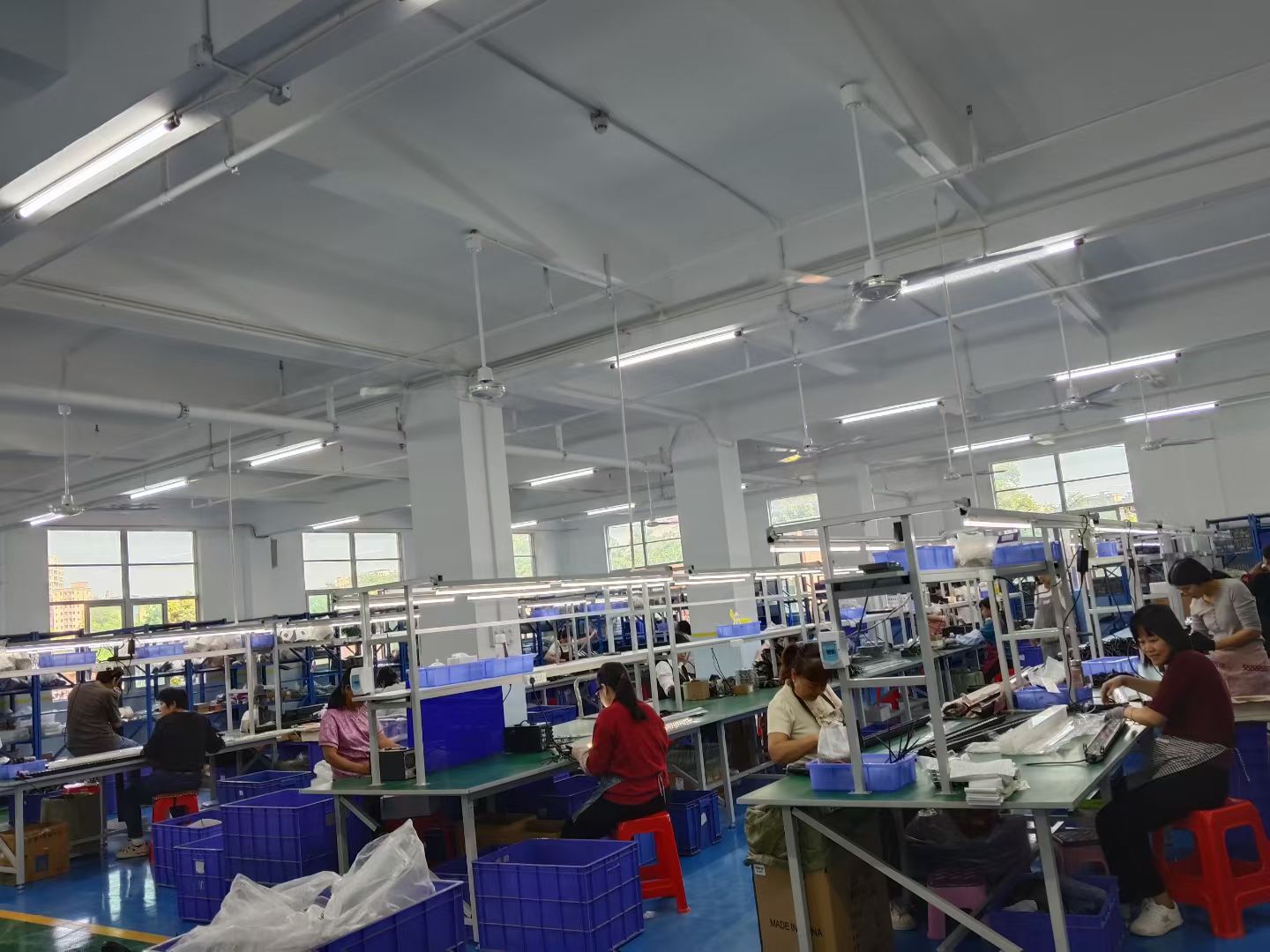
Step 3 — Where Suppliers Are Actually Found
Different channels produce different quality of lead. The useful move is not to pick one but to work two or three in parallel, because the same company that answers a platform enquiry with a copy-paste reply may behave completely differently when you meet them at a show.
| Channel | Signal-to-noise | How to get more out of it |
|---|---|---|
| B2B platforms (Alibaba, Made-in-China, Global Sources) | Very high volume, low average quality. Verification badges confirm a business exists, not that it manufactures or that its documents are valid. | Filter by product depth, not by badge. Ask every shortlisted supplier for the approval number of the exact model they quoted. |
| Trade shows (Automechanika Frankfurt / Shanghai / Dubai, Canton Fair, AAPEX, Mid-America Trucking Show) | Low volume, highest average quality. You meet the people who will actually handle your order. | Ask what is on the stand: a company showing four product families is usually a supplier; one showing sixty is usually trading. |
| Search engines | Medium. Rewards specificity in the query. | Search the product term the factory would use (“ECE R148 LED rear lamp manufacturer”), not the consumer term. Check whether the site shows real approvals with numbers. |
| Industry directories and associations | Low volume, medium quality. | Useful for finding European importers and distributors in the same trade — often a faster route to a reliable Chinese supplier than any platform. |
| Referral from another importer | Lowest volume, highest average quality. | Ask what went wrong as well as what went right. Nobody has a supplier with no problems; you want to know which problems. |
A workable funnel from a cold start looks like this: gather ten to fifteen names across two channels, reduce to five with the checks in Step 4, send all five the same RFQ, take the three best answers to samples.
Step 4 — Seven Checks Before You Ask for a Price
Screening is cheaper than sampling. These seven checks can be run from the supplier’s own replies and documents, and they remove most of the risk before you spend money on courier fees.
| Check | What to ask | Good answer | Warning sign |
|---|---|---|---|
| 1. Business scope | Send the business licence, and say which product lines it covers. | Scope includes manufacture or sale of vehicle lighting; company age and address are consistent with the website. | Licence image is unreadable, expired, or the name differs from the one on the quotation. |
| 2. Product depth | How many live SKUs in this product family, and how many are your own moulds? | A specific number, with the models named. Some are described as their own tooling. | Everything is “available”; no model numbers; the catalogue repeats other companies’ photos. |
| 3. Approval documents | For the exact model quoted: approval number, issuing authority, and the test report. | A number you can check against the marking on the product, with a report that lists the same model designation. | A generic certificate, a report for a different model, or a logo on a webpage with no number. |
| 4. Manufacturing or trade | What equipment runs the process — injection moulding, SMT, potting, ageing test? And what is subcontracted? | Clear answers about what is in-house and, importantly, what is not. | Every step claimed in-house with no detail, or refusal to name a single subcontractor. |
| 5. Quality control | Who inspects, against what standard, and can I see a recent report? | A named process, an AQL level, a sample report showing measurements and photos. | “We check 100%, no report.” |
| 6. Reference markets | Which countries do you currently ship these models to, and which approvals do those buyers request? | Named markets consistent with the approvals offered. | Claims to supply every market, including ones whose approvals they cannot produce. |
| 7. Engineering response | One real technical question: at what ambient temperature does the driver derate, or what is the lens material and its UV rating? | A specific, checkable answer, or an honest “I will confirm with the engineer” followed by a real answer. | Marketing language, a datasheet resent, or an answer that contradicts the earlier one. |
If a supplier sends an E-mark or a DOT claim, you can verify part of it yourself in a minute — the marking scheme, the authority codes and the function letters are all decodable, as set out in How to Read an E-Mark. A supplier who objects to being checked this way is telling you something useful.
Step 5 — Send an RFQ That Produces Comparable Quotes
The purpose of the first email is not to get the lowest price. It is to get five answers in the same format, so that comparing them means something. Send the identical document to every supplier, with your specification table from Step 1 attached.
| What your RFQ should contain | Why it matters at quotation stage |
|---|---|
| The specification table, complete | Removes the “please advise your requirement” reply loop. |
| One Incoterm, the same for everyone | Makes the numbers comparable without a second round of emails. |
| A second price at a landed or delivered basis | Exposes packing weight and freight assumptions you would otherwise discover later. |
| Quantities at two levels | Shows the price break without asking a supplier to guess your volume. |
| Whether the price includes the mould or the print plate | Prevents tooling appearing as a surprise line in the proforma invoice. |
| Certification required, by market | Separates suppliers who hold the approvals from those who will “look into it”. |
| Sample availability and sample charge | Tells you how they treat small buyers, which is how they will treat you. |
| Target delivery window | Filters out suppliers whose production slots do not actually match your schedule. |
Ask for a breakdown, not just a number. A quotation split into lamp, bracket, packaging and tooling tells you what is negotiable. A single figure tells you nothing except the seller’s confidence.
Do not start by demanding the lowest price. Suppliers who win on the first number alone are the ones who recover it later in the grades of LED, the thickness of the heatsink or the gasket. Get comparison first; negotiate after you know what you are buying.
Keep the questions technical. A supplier who answers a question about driver derating with a question about your budget is a reseller. That is allowed — just price them accordingly.
Step 6 — Samples, Tooling and NRE
Samples are the cheapest insurance in this trade, provided you test them against the specification rather than against the photograph.
| Item | Who normally pays | What to get in writing |
|---|---|---|
| Sample unit | Buyer pays for modified or branded samples; often free for a catalogue item. | Whether the sample charge is credited against the first production order — and how many units that requires. |
| Courier | Buyer, almost always. | Which courier, and whether the supplier will declare the true value on the waybill. |
| Tooling / mould | Buyer for a new design; shared or absorbed for a minor modification to an existing mould. | Who owns the mould, who stores it, and what happens to it if you change supplier. |
| NRE / engineering time | Buyer, where design work is genuinely new. | Scope in hours or deliverables, and whether it is one-off or per revision. |
| Print or pad plate | Buyer, one-off. | Which artwork is approved, and the file format kept on record. |
| Certification testing for a new variant | Normally the buyer for a new design; usually the plant for an existing approved product. | Who applies, who holds the approval, and which model number will appear on it. |
The golden sample is the contract. Once a sample is approved, sign the date on it, note any deviations you accepted, and make the pre-shipment inspection compare production against that unit — not against the catalogue. Most disputes about colour, beam pattern and cable length are really disputes about a sample nobody wrote down.
Ask about mould custody before you pay for it. Moulds sitting in a plant you no longer buy from are a common and completely avoidable loss.
Step 7 — OEM, ODM or Private Label
These three words are used interchangeably by sellers and mean different things. Get the version you are actually buying.
| Route | Whose design | What changes | Typical minimum | Best for |
|---|---|---|---|---|
| Private label on a catalogue item | Supplier’s | Your logo printed or laser-marked on the housing, your packaging. | Lowest of the three — often one carton quantity | First order, testing a market, small distributors |
| ODM (light modification) | Supplier’s, adapted | Beam pattern, wiring length, connector, colour, bracketry, control behaviour. | Mid — depends on whether the mould is touched | Buyers with a clear requirement and a repeat plan |
| OEM (full custom) | Yours | Everything: optics, housing, dimensions, driver, branding and performance data. | Highest — a new mould is being cut | Established importers, fleet programmes, tender supply |
There is no prize for starting at OEM. A private-label order on an existing mould gets you to market in weeks with money left for the second order; a full custom programme gets you exclusivity and a tooling bill, and a design you may want to change once you have real demand data.
Step 8 — Understanding What Sets the Price
Chinese truck lighting is cheaper than equivalent Western production for structural reasons, and knowing them helps you tell a genuine saving from a hidden substitution.
| Cost element | What it does | Where the real savings are | Where cheap is expensive |
|---|---|---|---|
| LED emitters | Light output, colour consistency, long-term lumen maintenance. | Scale of purchasing and binning by the plant. | Un-binned or grade-B emitters: visible colour mismatch across a batch, faster fade. |
| Driver / electronics | Voltage tolerance, EMC behaviour, surge survival. | Mature reference designs made in volume. | Cheap drivers are the single most common cause of field failure and of failing ECE R10 testing. |
| Housing and heatsink | Thermal path, corrosion resistance, mounting stiffness. | Die-casting at volume, integrated heatsink design. | Thin-section housings crack at the bracket under vibration; under-sized heatsink shortens LED life. |
| Lens and optics | Beam shape, colour fidelity, UV and scratch resistance. | In-house moulding with good tooling. | Optics copied from a photo rather than designed: wrong beam, wrong cut-off, non-compliant output. |
| Sealing and potting | Ingress protection, condensation behaviour. | Automated gasket placement and potting lines. | Silicone replaced by cheaper sealant; IP claim survives the first rain, not the first winter. |
| Harness and connector | Voltage drop, vibration resistance, service life. | Standardised connector families bought in bulk. | Undersized conductor gauge: drop results in dim lamps that the buyer diagnoses as “bad LEDs”. |
| Assembly labour | Consistency and throughput. | Scale and automation. | Hand-assembly without fixtures: unit-to-unit variation that your customers see. |
| Testing and certification | Proof, and your legal position in the destination market. | Amortised across the plant’s volume. | Skipped or borrowed approvals: the saving is real until the first customs or market-surveillance check. |
| Packaging | Arrival condition and freight volume. | Carton engineering for the shipping mode. | Under-sized cartons mean returns; over-sized cartons are quietly the largest freight cost in the order. |
The two questions that separate a real cost advantage from a substitution: which emitter brand and bin, and which driver topology. Ask both in writing. A supplier with a genuine cost advantage answers immediately, because their answer is good.
Step 9 — MOQ, Lead Time and Payment Terms
Minimums in this industry are set by the production process, not by negotiation skill. A new mould, a colour change and a printed logo all have different economics, and it is worth understanding which one is driving the number you were given.
| Order type | What drives the minimum | Typical lead time after deposit |
|---|---|---|
| Catalogue item, no change | Carton and shipping economics | Shorter of the three — frequently stock or a short production run |
| Private label on existing mould | Print plate setup and packing run | Add a step for printing or marking and packing |
| ODM light modification | Production changeover and re-testing | Longer — add sample approval and any re-test |
| New tooling / full OEM | Mould manufacture and first-article approval | Longest of all — mould making comes before production scheduling |
| Peak season (Q3–Q4) | Plant capacity | Add weeks, and book earlier: this is when schedules slip most |
Payment. The common structure is a deposit with the balance before shipment, released against inspection. That is a reasonable balance of risk for both sides on a first order, and it is why the pre-shipment inspection in Step 11 matters: it is your last chance to withhold the balance on evidence rather than on argument.
What to avoid on a first order. Full payment in advance, for obvious reasons; and, at the other extreme, a supplier who offers generous credit terms on a first order without checking anything about you — that usually indicates the terms will be recovered elsewhere.
For repeat orders, it is normal to move toward partial credit or a letter of credit as the relationship and the volumes justify it. Ask for the terms you want, in writing, before the first order ships, not after.
Step 10 — The Compliance Documents to Collect
Approval documents belong to the entity that had the product tested. For the product lines we supply, that entity is the manufacturing plant we work with, not JTPART itself — so when we send a document, ask us which model it covers and who holds it. Any supplier should be able to answer that without hesitating.
| Document | Who issues it | What you do with it |
|---|---|---|
| ECE type approval (with number and issuing authority) | The approval authority, via the plant | Check the number against the marking on the lens and the model designation on the report. |
| FMVSS 108 self-certification file and SAE test data | The manufacturer, as a self-declaration | Understand that it is a declaration, not a government approval, and keep it in your technical file. |
| ECE R10 EMC report | Test laboratory | Relevant to any lamp with electronics — it is the standard that keeps interference off the vehicle network. |
| Ingress protection test report | Test laboratory | Confirms the IP figure claimed for the exact model; check whether it is immersion or high-pressure wash. |
| RoHS / REACH declaration | Manufacturer or laboratory | Required for market access in the EU and increasingly requested by distributors elsewhere. |
| Material and packaging declaration | Manufacturer | Wood packaging treatment, battery content, and any restricted substances. |
| Commercial invoice, packing list, bill of lading, certificate of origin | Supplier, carrier, chamber of commerce | The customs set. Errors here cost more time than any production problem. |
| Model-to-marking confirmation | Supplier, in writing | One sentence tying the quoted model number to the marking on the unit. Ask for it every order. |
Consistency is the whole test. The approval number, the model designation on the report, the marking on the lamp and the description on your commercial invoice should describe the same article. When they do not, the problem surfaces at the worst possible moment: a customs inspection, a market-surveillance letter, or a customer’s own auditor.
Two related reads: ECE R10 and electromagnetic compatibility explains why the driver, not the LED, causes interference complaints; IP67 vs IP68 vs IP69K explains which water test your specification is actually asking for.
Step 11 — Quality Control Before It Ships
Inspection is most valuable when it compares production to an agreed sample, on a defined sample size, before the goods leave. Handled that way it is inexpensive relative to a partial shipment of wrong lamps.
| Inspection item | How it is checked | Judged against |
|---|---|---|
| Packaging and labelling | Carton condition, print quality, barcode and model text. | Approved artwork and packing list. |
| Appearance | Housing finish, moulding marks, lens scratches, colour consistency across the batch. | The golden sample, side by side. |
| Powered function test | Every unit or an AQL sample, powered at rated voltage. | Function, colour and output comparable to the sample. |
| Photometric check | Random units measured for output and beam shape. | The specification, where a measurable figure was agreed. |
| Sealing check | Gasket seating, potting coverage, connector sealing. | The IP rating the model is approved to. |
| Harness and connector | Pull test, continuity, correct pin-out and length. | The agreed wiring schedule. |
| Ageing / burn-in | A short powered run to catch early failures. | Internal standard plus your own acceptance rule. |
| Carton drop and stacking | Representative carton dropped and stacked as it will ship. | Arrival in saleable condition. |
| Loading supervision | Container or pallet loading witnessed and photographed. | Packing list quantities and carton count. |
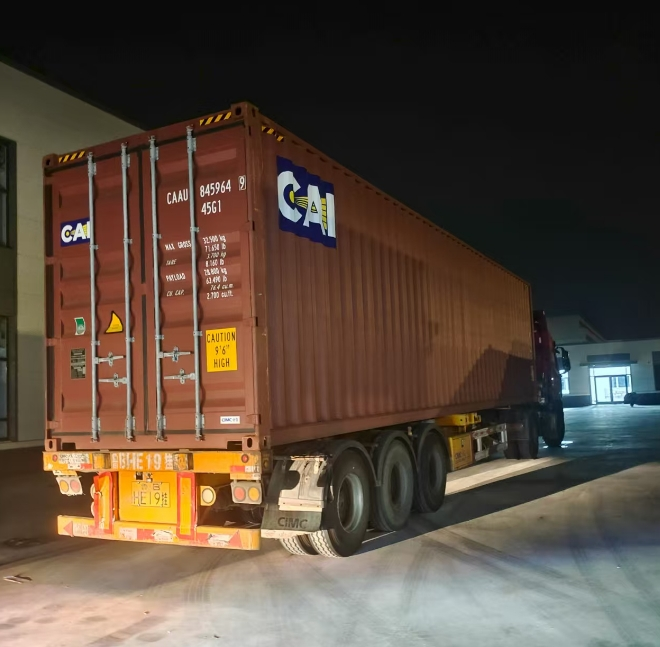
Step 12 — Shipping, HS Codes and the Landed Cost
The last stage decides whether the order was worth doing, and it is the one most first-time importers are least prepared for.
| Incoterm | Who arranges and pays | Where the risk passes | When it suits you |
|---|---|---|---|
| EXW | You, from the factory gate | At the factory | Rarely worth it: you take on Chinese export formalities as a foreign buyer. |
| FOB | Supplier to the port of loading; you thereafter | When the goods are on board | The default for most container orders, and the easiest basis on which to compare suppliers. |
| CIF | Supplier pays freight and insurance to your port | Still at loading | Convenient, but check the insured value and the shipping line before accepting. |
| DDP | Supplier handles everything to your door | On delivery | Good for small or first orders; verify who is the importer of record on the paperwork. |
| Product | Common HS heading | Note |
|---|---|---|
| Vehicle lighting and signalling equipment | 8512.20 | The usual heading for lamps and visual signalling equipment for motor vehicles. |
| Parts of lighting or signalling equipment | 8512.90 | Applies to components and accessories rather than complete lamps. |
| Self-contained LED lamps and luminaires | 9405.4x | Can apply to work and area lighting not specific to a vehicle; classification depends on the article. |
| Mounting brackets and hardware | Dependent on material | Often classified by the metal, separately from the lamp. |
The packaging line wins arguments. Carton dimensions decide how much air you ship. A lamp that is 20% lighter but packed 40% bulkier can cost more to land. Ask for carton dimensions and units per carton on every quotation, and compare volume, not only weight.
Then test the total. Take the two or three best suppliers and build the full landed figure for each: unit price, packaging, freight, insurance, duty, clearance and last mile. This is the number that decides your selling price; the factory price only decides the seller’s.
Mistakes That Cost Buyers Money
These are the failures we see most often across enquiries, in rough order of how much they cost.
- Quoting from a photograph. A photo proves a lamp was made, not that it will be made for you at that quality.
- Choosing on unit price alone. The landed figure is the only one that touches your margin.
- Not writing the specification down. Everything that is not written is decided by whoever is cheapest to produce.
- Accepting an approval document that names a different model. It protects the supplier’s catalogue order, not your shipment.
- Skipping the pre-shipment inspection to save the fee. The fee is reliably smaller than the failure it prevents.
- Approving a sample without keeping it. Without the sample, the standard for the inspection becomes negotiable.
- Ordering full OEM before the market has answered. Tooling bought in year one is often unwanted by year two.
- Comparing cartons by weight rather than volume. The cheapest lamp per unit is not the cheapest lamp per container.
- Paying in full before production in a new relationship. Deposit plus balance against inspection exists for a reason.
A Sourcing Checklist You Can Print
- ☐ Specification table written and dated, including market and approval regime
- ☐ Ten to fifteen supplier names gathered from at least two channels
- ☐ Seven checks run on each; shortlist reduced to five
- ☐ Identical RFQ sent to all five, one Incoterm, two quantity levels
- ☐ Approval documents requested for the exact model, and checked against the marking
- ☐ Samples ordered, tested against the specification, one kept as the golden sample
- ☐ Tooling, NRE and sample credit confirmed in writing, including mould custody
- ☐ MOQ, lead time, payment split and warranty in one document with the price
- ☐ Document set scheduled: approvals, declarations, customs papers
- ☐ Inspection agreed: AQL level, acceptance numbers, who attends
- ☐ Carton dimensions and units per carton received for every quotation
- ☐ Landed cost modelled for the final two suppliers before the order is placed
Frequently Asked Questions
How do I find a reliable truck LED lighting supplier in China?
Work two channels at once rather than one — a trade show or a referral for quality, plus a platform or search for volume — then screen before you sample. In practice the screening in Step 4 removes most of the risk: ask for approval documents tied to the exact model quoted, ask which processes are in-house and which are subcontracted, and ask one genuinely technical question. Suppliers who answer engine questions specifically are the ones worth sampling.
What is the minimum order quantity for custom truck lights?
It depends on which of the three routes you are taking. Private label on an existing mould carries the lowest minimum because nothing new is being made; ODM light modification sits in the middle; a new mould or a full OEM programme carries the highest, because tooling has to be cut and first articles approved. Ask which line your requirement falls on and what specifically is driving the number — a supplier who can explain the minimum is usually one who can also reduce it.
Are Chinese-made truck lights certified for Europe and the United States?
Certification is product- and plant-specific, not country-specific, so the honest answer is: ask about the exact model. A lamp can hold ECE type approval for Europe, and a different article from the same plant can be self-certified to FMVSS 108 for the United States; these are separate processes and separate documents. The approval is held by the entity that had the product tested — normally the manufacturing plant. What you should insist on as an importer is that the number on the document matches the number moulded into the lamp you are buying.
How long does an order take from China?
Four clocks run at once: sample approval, production, inspection and shipping. Production usually starts only after the sample is approved and the deposit has cleared, and a new mould adds a stage before that. Ocean freight then adds weeks of transit on top. Ask for the schedule broken into those stages rather than a single total, and note that capacity tightens in the second half of the year.
What payment terms are normal for a first order?
The common structure is a deposit with the balance paid before shipment, released after a pre-shipment inspection. That is a fair split of risk on a new relationship. Payment in full before production is the one to avoid; unusually generous credit offered to a buyer nobody has checked is worth a second look as well. As volumes repeat, partial credit or a letter of credit are normal things to ask for — agree them before the order ships, not afterwards.
Can I put my own brand on the lights?
Yes, and at three different depths. A logo printed or laser-marked on the housing of an existing model is the lightest and quickest. Beyond that come packaging, wiring and connector changes on the same mould. Further again is a genuinely custom product. Each step raises the minimum, the lead time and the tooling cost, which is why most first orders should start at the lightest version and earn their way up.
How do I compare quotations that use different terms?
Convert everything to one basis before comparing. Ask each supplier for the same Incoterm, get carton dimensions and units per carton, and build a landed cost that includes freight, insurance, duty, clearance and last mile. Two quotations that look 10% apart at the factory gate are frequently level, or reversed, once packaging volume and duty treatment are included.
Is it cheaper to buy from a factory or a trading company?
A trading company adds a margin, so its unit price is usually higher — but an order that mixes lamps, brackets and light bars from four plants becomes one invoice, one inspection and one shipment, which is often cheaper overall than four separate purchases. Buy on landed cost and on how much administration you want to do, not on the label a supplier gives itself.
Working with JTPART
We supply LED lighting for trucks, trailers, buses and plant machinery across nine product families — warning and safety lamps, signal lamps, marker and side lamps, tail lamps, work lights, strobes, light bars, brackets and headlamps — to importers, distributors and fleet buyers.
We are a supplier rather than a manufacturer, and we say so: the approvals and test reports on our product lines are held by the factories we work with, and we will tell you exactly which document covers which model when you ask. We do not publish prices on this site, because the honest price depends on your specification, quantity, packaging and delivery terms — all four of which you can now write down in an email.
Send us your specification → or start with a range: warning & safety lamps, work lights, light bars and headlamps.