Most buyers verify a supplier by asking for a catalogue and a certificate. Both are easy to produce, and neither tells you whether the lamp that arrives will be the lamp you approved. Verification is not a feeling about a company. It is seven checks, each with a specific piece of evidence, run in a specific order.
This guide goes deep on the single step where buyers lose the most money. It is the companion to our sourcing guide, which covers the full sequence from specification to landed cost; here we stay on one question only — how do you know, before you transfer money, that the company in front of you can actually do what it says?
Why Verification Fails Before It Starts
Three habits account for most of the money lost in this trade, and all three feel like diligence while they are happening.
Collecting documents instead of reading them. A folder of certificates that no one has opened is not verification. The document that matters is the one naming the exact model you are buying — and the most common failure in this trade is a certificate that covers a different lamp from the one on the invoice. See how to read an E-mark for what the markings themselves must contain.
Treating a platform badge as an audit. “Verified Supplier” on a marketplace means a third party confirmed, usually on a paid engagement, that the company exists and has the capacity it claims. That is genuinely useful as a starting point. It says nothing about whether the lamp is good, whether the approval documents are real, or whether the person emailing you can answer a technical question.
Deciding on price and then looking for confirmation. When the decision is already made, verification becomes a formality and every warning sign gets explained away. Run the checks first, shortlist second, negotiate third. The order is the whole point: checks that are cheap to run before contact are expensive to run after the deposit has cleared.
The Seven Checks at a Glance
Each check has one deliverable — a document, an answer or a clause. If you cannot name the deliverable, you have not done the check.
| # | Check | The deliverable you should be holding | Pass looks like | Fail looks like |
|---|---|---|---|---|
| 1 | Legal identity | Business licence extract, checked against the public registry | Scope covers the products; account name matches the licence | Personal bank account; scope that cannot cover the goods |
| 2 | Whose factory | Production address plus an in-house process list | Specific machines and lines named; subcontracting disclosed | “We make everything” with no detail; produced video only |
| 3 | Certificates | Approval or report naming the exact model, plus holder identity | Model and approval number match the marking on the lamp | Refusal, delay, or a document for a different article |
| 4 | Technical depth | One engineering question, answered specifically | Mechanisms and standards named, trade-offs explained | Generic reassurance; “good quality” as a specification |
| 5 | Process control | Description of test equipment and what is tested at 100% | Aging, sealing and function test named for the exact lamp | Quality discussed only as photos and slogan |
| 6 | Trade signals | A quotation detailed enough to be compared, plus references | Carton dimensions, units per carton, honest lead times | A price with no shape around it; urgency as a sales tactic |
| 7 | Before payment | Purchase order with inspection, document and account clauses | Terms agreed in writing without argument | Pressure to pay in full, fast, to a different name |
Check 1 — Confirm the Company Actually Exists
Every Chinese company of any size has a business licence, and the licence is public. Ask for a copy — any legitimate supplier will send it within a day, because their competitors already have it — and then check it against the source rather than accepting the PDF.
The licence carries a Unified Social Credit Code, an 18-character number that identifies the legal entity. Search that code in China’s official company registry (the National Enterprise Credit Information Publicity System). You are confirming four things: that the company exists; when it was registered; what its registered business scope covers; and whether its registered capital and status suggest a going concern.
Four details are worth reading closely:
- Business scope. It should plausibly cover what you are buying — manufacture or sale of vehicle lamps, auto parts, or lighting equipment. A food-trading company quoting you light bars is not automatically a fraud, but you should know which role it is playing before you rely on it.
- Registered capital. In China this figure is subscribed rather than necessarily paid in, so a large number means little on its own. Read it together with the registration date and the registry’s status flags, not as a strength score.
- Company name versus bank account name. This is the one that protects your money. The account you pay must be in the name on the licence. A supplier who asks you to pay a “friend’s account”, an agent, or a personal account is handing you a problem that no amount of product quality can fix.
- The name on the quotation. If the licence, the quotation, the proforma invoice and the email signature show four different company names, you have not yet identified your counterparty — and a contract needs one.
A note on export paperwork: the old requirement for a separate foreign-trade operator filing was abolished at the end of 2022, so its absence proves nothing either way. What you can still ask for is evidence of shipments: references you may contact, or bills of lading with commercial details redacted. Customs records themselves are not public.
Check 2 — Decide Whether You Are Talking to a Factory or a Trader
Almost everyone in this market describes themselves as a factory. Many are not, and the distinction matters less than buyers assume — a good trading company consolidates lamps, brackets and harnesses across several plants into one shipment and takes responsibility for the lot. What matters is knowing which business model is quoting you, because it changes what is negotiable and where your risk sits.
| What you observe | More consistent with a factory | More consistent with a trading company |
|---|---|---|
| Production address | An industrial-park address it invites you to visit | An office address in a commercial district |
| Process questions | Names its own machines: SMT lines, potting, injection moulds it owns | Answers in terms of “our engineers” and lead times |
| Range | Deep in one product family | Broad across many families and brands |
| Documents | Approvals naming the plant as holder | Approvals held by third plants, disclosed or not |
| Price behaviour | Price moves with the die-cast and LED market | Price moves with the negotiation |
| A 1688.com search | Its own domestic shop, priced below export | The same products sold by other domestic shops |
One practical technique: search the model number on Chinese domestic platforms such as 1688.com. If the same article appears under other names at lower domestic prices, you have learned who actually makes it and roughly what it costs inside China — useful leverage in a negotiation, and a quiet way to identify the plant behind a dealer.
The question that settles this fastest is direct: “Which processes for this specific lamp are in-house, and which are subcontracted?” A factory answers with processes. A dealer answers with reassurance. Neither answer is disqualifying; one of them is honest.
Check 3 — Read the Approval Documents Properly
Documents are where verification either becomes real or dissolves into folder-collecting. The discipline is the evidence ladder below: know what each level of paper can and cannot prove, and never let a level-1 document be treated as a level-3 one.
| Market | Document you should ask to see | What it proves — and what it does not |
|---|---|---|
| Europe | ECE type approval certificate for the model, naming the approval holder | A contracting-party authority granted type approval for that article. It does not prove the lamp in the carton is that article — the marking does that. |
| United States | Manufacturer’s declaration of conformity to FMVSS 108, plus the company’s self-certification records | There are no US approval certificates. NHTSA does not approve lamps, and nobody can honestly sell you a “DOT certificate”. Self-certification is a process you audit, not a paper you file. |
| Saudi Arabia | Product Certificate of Conformity issued through the SABER platform, plus shipment CoC | Product-level conformity exists in a public system you can ask to see. Certificates bought as PDFs rather than issued through the platform are not conformities. |
| Any market | Lab test report for the specific model (photometry, IP, EMC) | Measurements were made on a submitted sample. Check the lab’s accreditation (CNAS in China, recognised internationally under ILAC-MRA), the sample identity and the date. |
The single most valuable habit in this entire guide: check that the model on the document is the model on your quotation. Approvals are held by entities, and cover article numbers. A certificate naming a different lamp protects the seller’s catalogue, not your shipment.
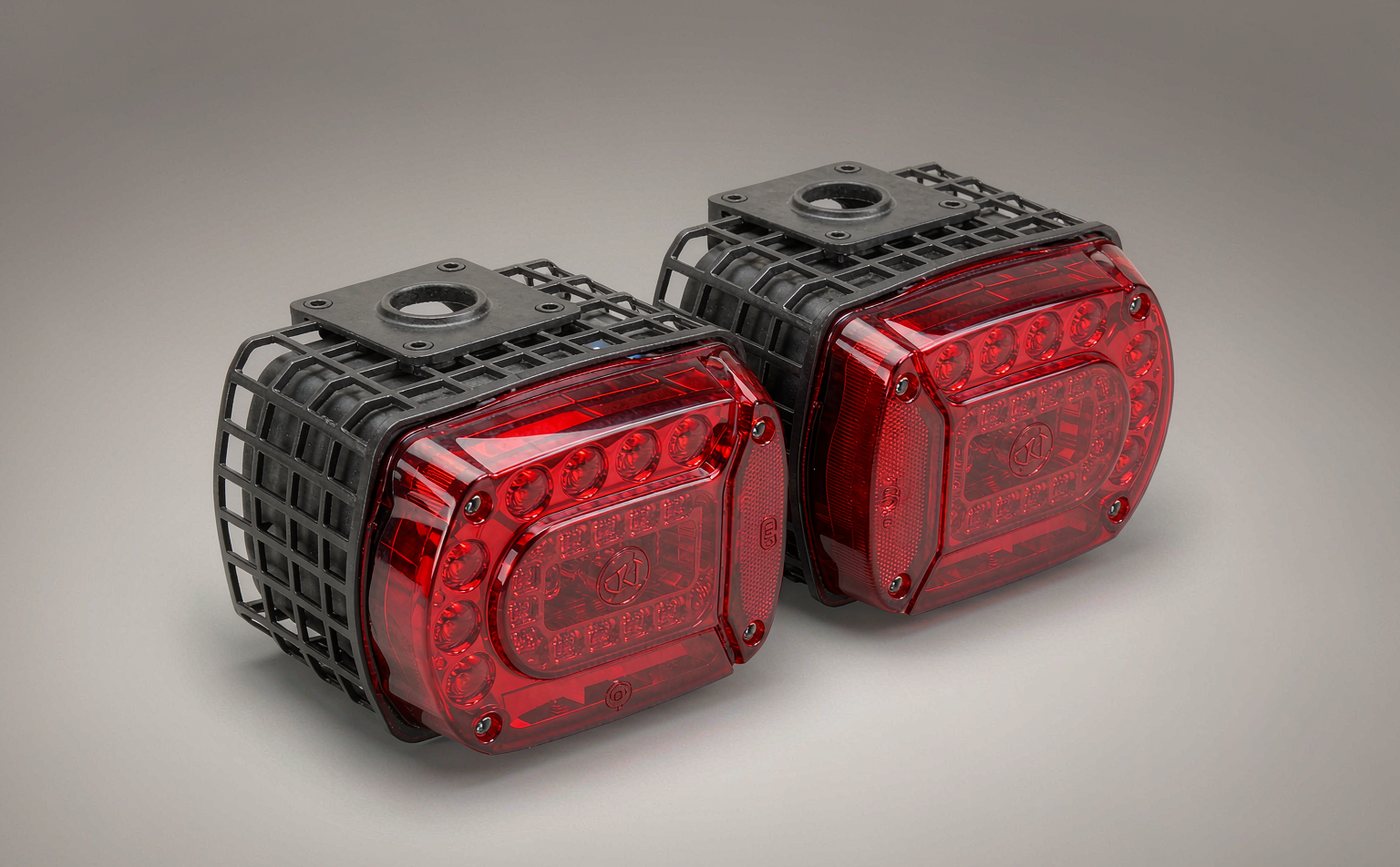
It is also worth knowing what the marking on the lamp itself can tell you independently of any paper. An E-mark is moulded or laser-etched — not a sticker — and it encodes the approval country, the regulation number and the approval number; we walk through it position by position in How to Read an E-Mark. For warning lamps specifically, the class matters as much as the approval: ECE R65 Class 1 versus Class 2 changes the intensity a beacon must reach, and the price follows. If EMC matters to your market, the driver behind the lens is the part that gets tested — see ECE R10 explained.
Check 4 — Ask One Question Only an Engineer Can Answer
You are not testing whether the salesperson knows engineering. You are testing whether an engineer is close enough to the conversation to be consulted. Suppliers who have them come back in a day with a specific answer; suppliers who do not come back in five minutes with a confident one.
| Product family | The question to ask | What a real answer sounds like |
|---|---|---|
| Work lights | “How do you prevent lens yellowing over five years outdoors?” | Names UV-stabilised polycarbonate grades and a coating or material trade-off, not simply “good material”. |
| Warning beacons | “What flash frequency does R65 require, and how do you hold it across voltage?” | Quotes the 2–4 Hz window and explains how the driver regulates it. |
| Marker lamps | “Which approval does this lamp carry for the EU market today?” | Says R148 and can name the classes that apply to the function. |
| Headlamps | “What does the H prefix on the approval mark mean for this lamp?” | Explains it is a performance class marking, not a bulb type. |
| Any 12/24V lamp | “Is the driver regulated? What happens at 9V and at 32V?” | Describes constant-current regulation and the wide-voltage design, rather than quoting a nominal figure. |
| Any LED lamp | “How is EMC handled, and what passes at the connector?” | Discusses filtering, layout and R10 test levels instead of “no problem”. |
Why this check is disproportionately predictive: engineering depth is expensive to fake and slow to build. A company that can answer one hard question specifically will usually answer the next fifty, and a company that cannot will disappoint you on the exact issues — sealing, EMC, thermal design — that cause field failures.
Check 5 — Look for Process Control, Not Promises
“Quality control” is a phrase every supplier uses. The verifiable version is a short list of equipment and what runs at 100%:
- What is tested on every unit. Function test is the minimum. For sealed lamps, look for a defined leakage or pressure-decay test; for work lights, an electrical safety and current-draw check; for approved lamps, a photometric spot check against the approval class.
- What is aged. A burn-in rack that runs finished lamps for a defined period catches the driver and solder faults that appear in the first hours of life. Ask how long, at what load, and what happens to a unit that fails.
- What is measured, and with what. An integrating sphere or a goniophotometer for output claims; an IP test station (tank for IP67/68, jet nozzle for IP69K) for ingress ratings; a salt-spray chamber for brackets destined for road salt. Equipment can be photographed on a video call in real time.
- What happens when something fails. A containment process — who stops the batch, who records it, whether traceability goes back to a production date — separates a managed line from a busy one.
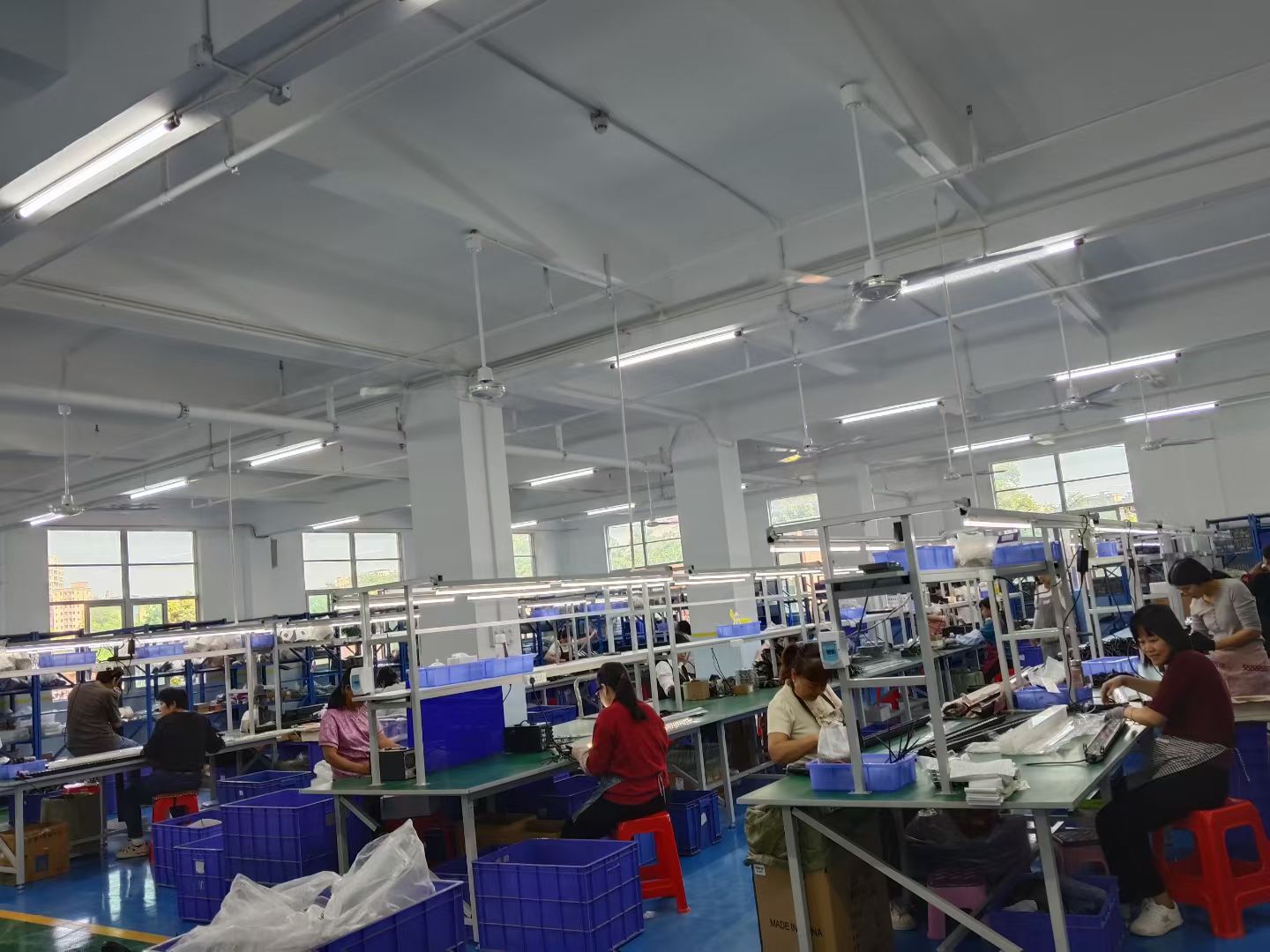
You do not need to fly in to see this. Ask for a live video walk-through of the specific tests, on a working day, with your questions asked as the camera moves. A produced film proves someone owns a camera; a live call with the aging rack running proves the rack exists.
Check 6 — Read the Commercial Signals
How a company quotes tells you how it will behave after you have paid. The signals are small and consistent.
The shape of the quotation. A serious quotation carries the exact model, carton dimensions, units per carton, gross and net weight, an HS code, a validity period and stated Incoterms. That is not paperwork vanity: carton volume decides your freight cost, and a supplier who knows their carton data is a supplier who ships containers regularly. The sourcing guide shows how to compare two quotations on this basis.
The explanation of the minimum. Ask why the MOQ is what it is. “Because of the mould”, “because of the packaging print” and “because of the approval batch” are all real, different reasons with different levers. A supplier who can explain their minimum can usually reduce it; a supplier who cannot will not.
Lead time stated in stages. Sample approval, production, inspection, shipping — as separate clocks. A single number is a marketing claim; four numbers are a schedule you can hold.
References and history. Two references you may contact — ideally one in your market — and an exhibition record (Automechanika, Canton Fair, a national commercial-vehicle show) are checkable facts. Longevity in one product family is itself a signal: the companies that fail buyers leave that product line, and the registry in Check 1 often shows it.
How they sell. A supplier who leads with urgency, discounts that expire tomorrow, or a price far below the band that every other quotation sits in, is asking you to skip the checks. The price band for a product family is fairly tight across the serious suppliers in this market; an outlier is information.
Check 7 — Put the Paperwork in Place Before Money Moves
The last check happens on your side. A relationship is enforceable only when the order documents carry the facts the other six checks produced.
| Clause | What it should say | Why it earns its place |
|---|---|---|
| Model identity | Exact model number, approval references and marking requirements, by part | Makes Check 3 contractual rather than hopeful |
| Inspection | Third-party pre-shipment inspection at an agreed AQL, before balance payment | Converts quality from a promise into a gate |
| Documents | Which certificates, reports and declarations are delivered, and when | You cannot clear customs or defend the goods without them |
| Payment | Deposit with balance after inspection, to the licensed company account | Keeps your leverage past the point where you have paid everything |
| Tooling and marks | Who owns any mould or printed packaging, and what happens on exit | Decides whether your private-label order is yours or theirs |
| Warranty | What is covered, for how long, and how claims are settled | A warranty that exists only in conversation does not exist |
On payments: the ordinary structure for a first order is a deposit to start production and the balance after a pre-shipment inspection has passed. Full payment before production removes your only leverage, and a request to pay any account other than the licensed company name should end the negotiation until it is explained in writing.
Red Flags That Should End the Conversation
None of the following is proof of fraud. Each one is a reason to stop and get the underlying question answered in writing before proceeding — and most buyers who lost money in this trade ignored one of them.
- Refuses a live video call, or only ever offers a produced film
- Cannot or will not show the approval document for the exact model quoted
- Claims a NHTSA or “DOT certificate” exists for a lamp sold into the US market
- Approval holder is an unrelated company and the answer to “why” keeps changing
- Bank account name differs from the licensed company name
- Price far outside the band the other quotations occupy
- Willing to “provide any certificate you need” for any product
- Cannot describe a single 100% test performed on the lamp before packing
- Demands full payment before production on a first order
- Cannot name one customer, exhibition or reference you could contact
What Verification Cannot Tell You
Honest verification has limits, and it is better to know them than to feel covered.
Checks 1 to 7 reduce the chance that you are dealing with an entity that cannot do the work. They do not guarantee that this batch is good, that the LED bin is the one you were quoted, or that the second order will match the first. Those risks are covered by different tools: the sample you approve and keep, the pre-shipment inspection you pay for, and the purchase order clauses in Check 7.
Verification also decays. Companies re-register, plants move, and sales teams change. Re-run the cheap checks (1 and 3) whenever you start a new product family with an existing supplier, and re-check the paperwork chain before any order that is materially larger than the last one.
A Verification Sheet You Can Print
- ☐ Business licence received and checked against the public registry by credit code
- ☐ Registered scope plausibly covers the products being quoted
- ☐ Licence name, quotation name, PI name and bank account name are identical
- ☐ In-house versus subcontracted processes disclosed for the quoted lamp
- ☐ Approval or report naming the exact model, with holder identity, on file
- ☐ Marking on the sample matches the document, character for character
- ☐ One engineering question asked in writing; the answer kept on file
- ☐ 100% tests, aging and test equipment confirmed on a live video call
- ☐ Quotation contains carton dimensions, units per carton and Incoterms
- ☐ MOQ explained in one sentence you could repeat to a colleague
- ☐ Two references requested, at least one in your market
- ☐ PI carries model identity, inspection, documents, tooling and warranty clauses
- ☐ Payment terms: deposit plus balance after inspection, company account only
- ☐ Golden sample sealed and dated by both parties
Frequently Asked Questions
Is a marketplace “Verified Supplier” badge enough?
It is a useful starting point and nothing more. The badge generally means a third party audited, on a paid engagement, that the company exists and has roughly the capacity it claims — which covers part of Check 1 and a sliver of Check 2. It says nothing about whether the approval documents are real, whether an engineer stands behind the quotation, or whether the specific lamp is any good. Treat it as a filter that narrows a long list, then run the seven checks.
How can I verify a supplier without visiting China?
Checks 1 to 4 need no travel at all: the licence is public, the documents are emailed, and the technical question is answered in writing. For Checks 2 and 5, a live video call on a working day — walking the line, showing the aging rack and the test equipment running — is a surprisingly effective substitute, because it cannot be edited. If the order is large, a third-party factory audit or a pre-shipment inspection costs a fraction of a flight and covers the physical verification.
What if the approval document shows a different company name than my supplier?
Ask for the explanation in writing before anything else. Common legitimate reasons: the approval is held by the manufacturing plant while the seller is a trading company, or the holder is a brand partner. What matters is that the document names the exact model, the holder is traceable and willing to be named, and the marking on the lamp matches. A holder that cannot be explained coherently is a genuine red flag.
How do I know if a certificate is fake?
Three tests catch most of them. Read it: approvals name a holder, an approval number and covered models, and the layout and regulation references are consistent with the issuing authority. Cross it: check the marking on the physical lamp against the document. And verify where you can: some contracting parties publish approvals in the UNECE DETA database, and laboratory reports can be confirmed with the lab directly. A supplier who resists all three has answered your question.
Is it safer to buy from a factory than a trading company?
Not automatically. A factory controls its own processes but quotes only its own range; a trading company consolidates several plants, takes responsibility for the consolidated shipment, and often answers faster across a wider set of products. What matters is honesty about which one you are dealing with, plus the same seven checks either way. A trading company that passes all seven beats a factory that fails Check 3.
Should I pay a deposit before production?
Yes — a deposit is normal and fair, because it commits capacity and materials. The structure that protects you is deposit to start, balance after a pre-shipment inspection has passed. What to avoid is full payment before production on a first order, and any request to pay an account whose name does not match the licensed company. Both remove your leverage at exactly the point you still need it.
What documents should I have before paying the deposit?
At minimum: the approved specification, the sample approval record with the golden sample sealed and dated, the PI naming the exact models and approval references, the agreed Incoterm, the inspection clause, and the document-delivery list. If any of those is missing, the deposit is not the problem — the order is not yet defined.
How much does third-party inspection cost?
It is typically a few hundred US dollars per man-day for a standard inspection in the main manufacturing regions, depending on the agency, the location and the scope. Set against a container of lamps that cannot be sold, or a re-work at your warehouse, it is among the cheapest risk reduction available in this trade — which is why the serious suppliers expect it and the others resist it.
Working with JTPART
Working with JTPART
We are a supplier of LED lighting for trucks, trailers, buses and plant machinery — nine product families, from warning and safety lamps to headlamps — and we are not a factory. That is exactly why we like this article: the seven checks above are the ones we invite buyers to run on us.
Concretely: we will send our business licence and check nothing about it in advance; we will tell you which processes on your quoted lamps are in-house and which belong to our partner factories; we will send the approval document for the exact model, held by the factory that tested it, and we will show you the marking on the sample before you commit. We do not publish prices, because the honest number depends on your specification, quantity, packaging and terms — all of which you now know how to write down.
Send us your seven checks → or start with a range: warning & safety lamps, work lights, light bars and headlamps.